Welcome!
PHYSDepot is a library of physics resources helpful to physicists at all stages — from beginners to professional researchers. Our goal is to curate tools, packages, simulations, and educational materials (broadly referred to across the site as "resources") that lower the barrier of entry to physics research and empower independent learners, students, and scientists alike.
⇢ To browse resources by discipline, click the "Explore" tab in the navigation bar! ⇠
We need your help! To recommend a resource (datasets, packages, software, learning tools, online interactives, simulations, and more), please see our
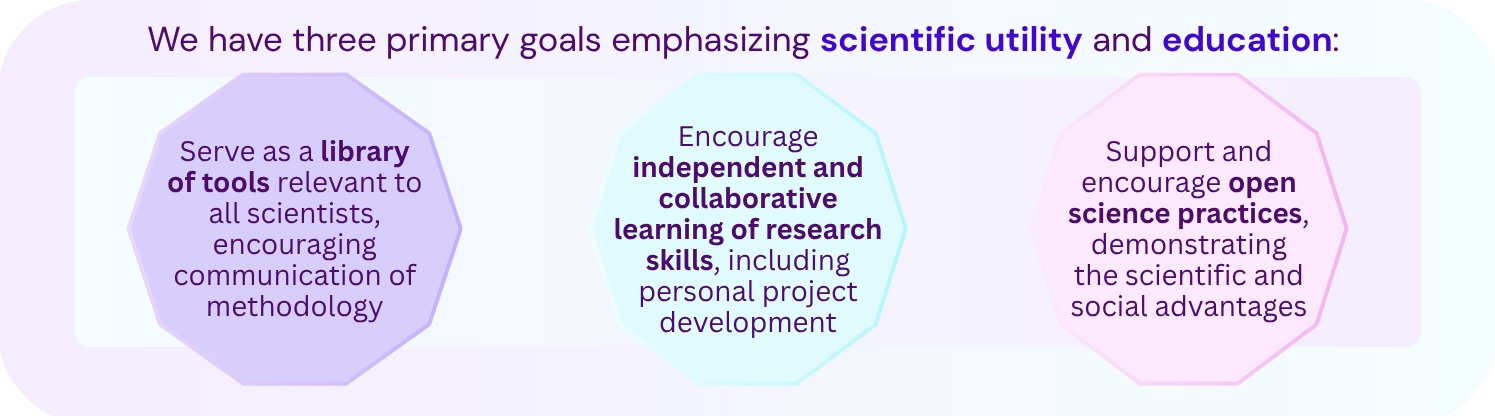
Whether you are just beginning your journey or working on advanced research, PHYSDepot is built to support your work. This platform was inspired by the struggle many students and scientists face when access to mentorship and educational opportunities are limited. We aim to connect, unify, and enable exploration of science and encourage independent learning.
PHYSDepot's powered by a network of involvement across institutions*










New to physics? Learning to code? Looking for coursework resources or Python notebooks to jumpstart your research? Visit the Learn tab!
Featured
Featured in Astrophysics 🪐
Astropy: Core Package for Astronomy Analysis in Python
Astropy is an all-in-one Python package focused on helping astronomers/astrophysicists navigate and transform large and small datasets. It allows users to easily work with numerous types of coordinate systems, constants, units, dates and times, and models and fitting. The package makes it easy to create, modify, and interface with FITS files, a common file type for working with astronomical data. Astropy is a must-have package for astronomers of all experience levels working in Python.
Featured in Quantum Information 💻
IBM Quantum Platform
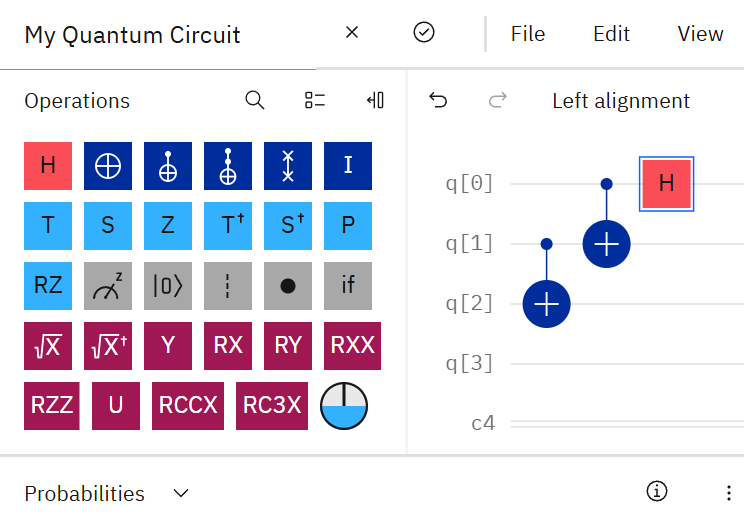
The IBM Quantum Platform offers some of theb est resources for beginner and more advanced quantum computing I've ever seen. Accessible upon creation of an IBMid, this web-based resources allows users to send quantum programs straight to IBM's quantum processors. They also offer a variety of learnign resources, including the Quantum Composer, a beautiful, clean interactive where individuals can toy around with quantum circuitry and immediately generate the corresponding code in Qiskit or OpenQASM 2.0. The platform offers courses in the fundamentals of quantum computing (IBM Quantum Learning). If you're an individual interested in experimenting with quantum computing/programming, the IBM Quantum Platform is a must-have. The only drawback is the user is only alloted 10 minutes of runtim on IBM's GPUs per month, which depending on the complexity of your quantum algorithms, may be a lot or too little.
Featured in Condensed Matter and AMO ⚛️
Microscopy Image Stitching Tool (MIST)
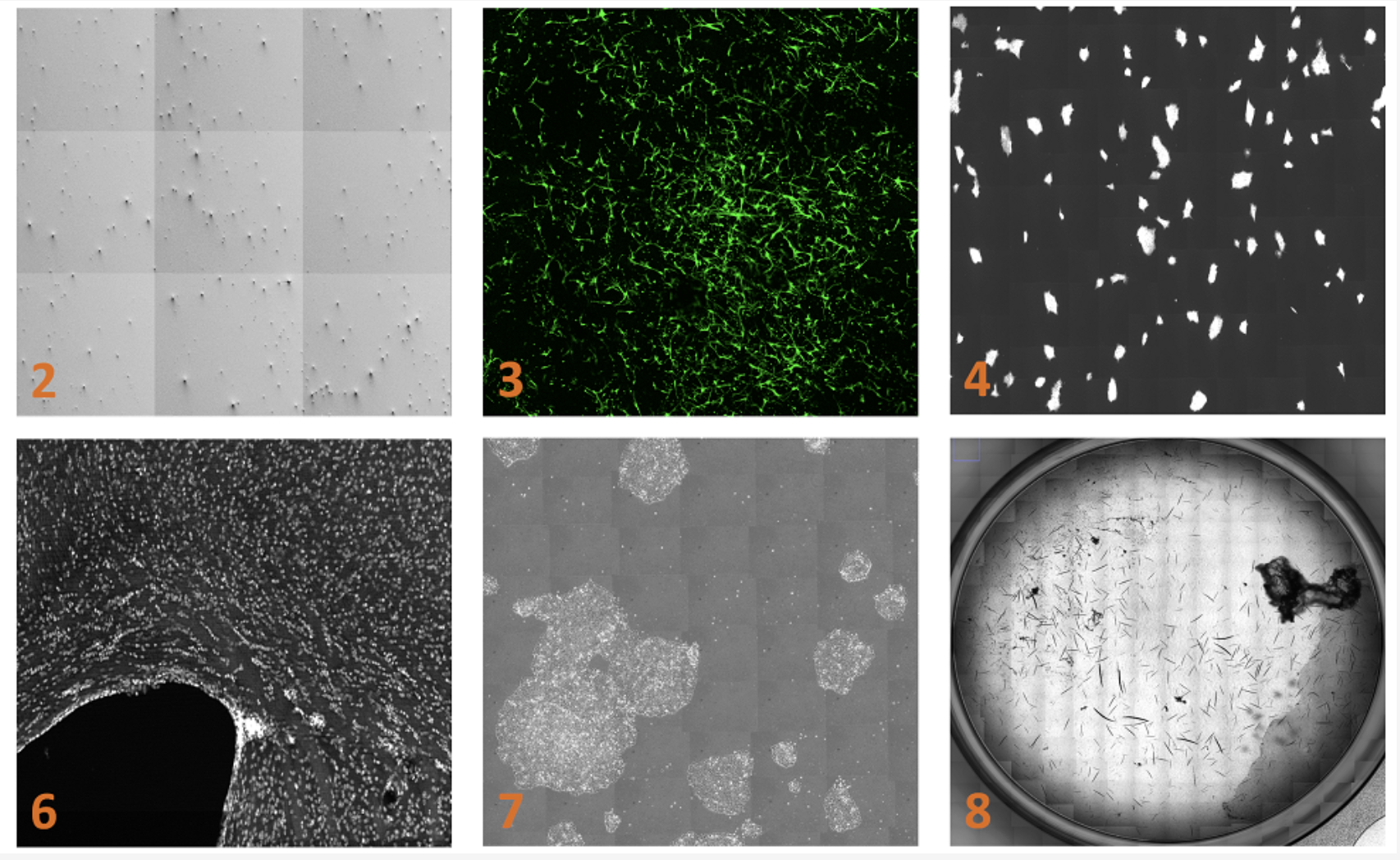
Able to make 2D stitches/overlays of any data set compatible with ImageJ. Optimizes translational overlays in the X and Y directions for a full cohesive image.
Featured in Particle and Nuclear Physics 💥
Particle Identification Playground
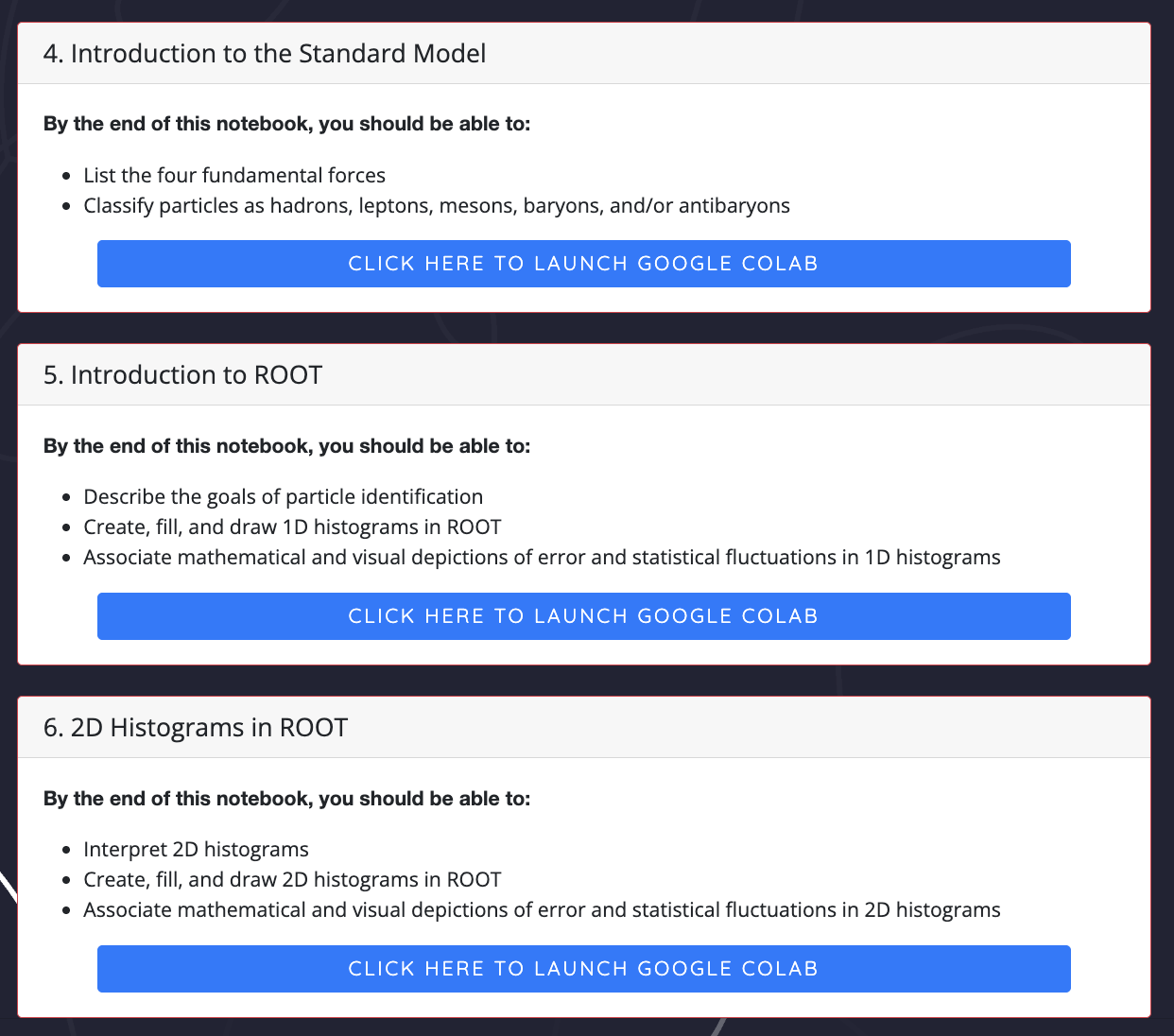
This website presents a series of activities that walk through the particle identification (PID) process, which aims to determine what particles interacted with the various detectors in particle physics experiments. These activities are designed for high school and early undergraduate students, and the only required knowledge is Python, though high school level physics may be helpful as well.
Featured in Biophysics and Geophysics 🧬
JMARS: Java Mission-Planning/Analysis for Remote Sensing
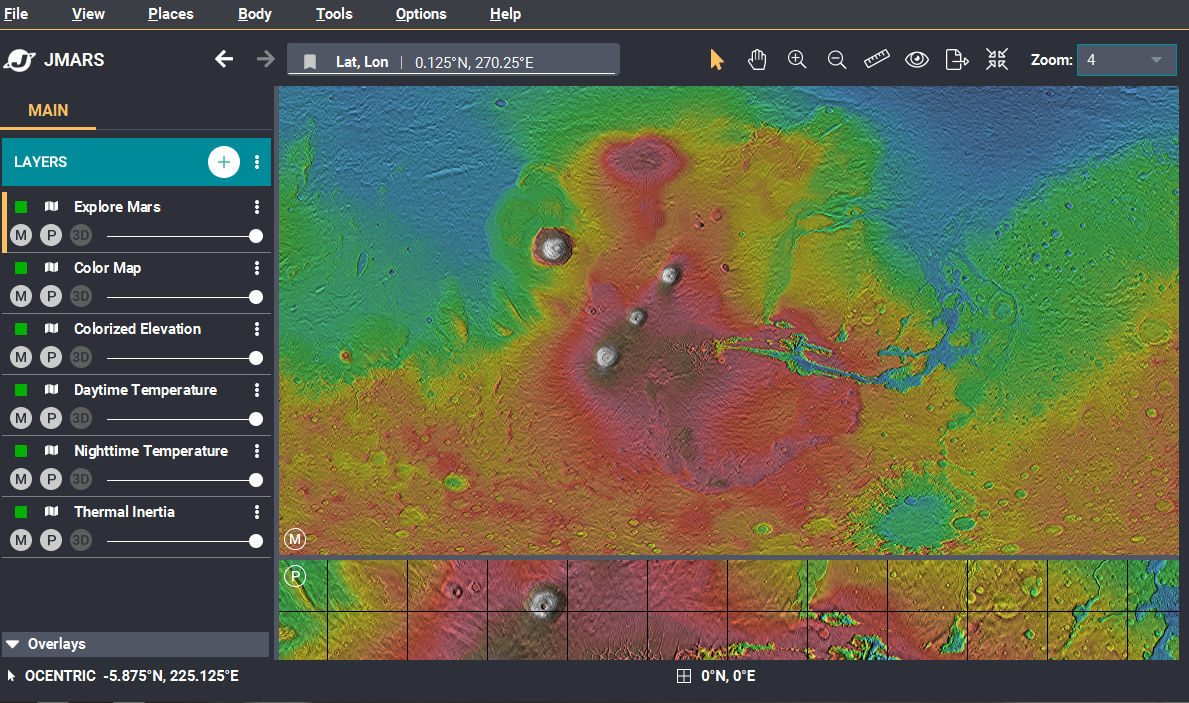
Provides interactive layer maps and datasets of various moons and planets, including but not limited to, Earth, Luna, Mars, Vesta, Venus, Pluto, etc. Developed at Arizona State University, the platform hosts open office hours, a Discord community, and a plethora of tutorials. JMARS has been used to plan many NASA missions, including "Mars Odyssey, Mars Global Surveyor, Mars Reconnaissance Orbiter, the Lunar Reconnaissance Orbiter, and the OSIRIS-REx asteroid sample return mission."
Featured in Experimental Techniques 🔍
RP Photons - Encyclopedia
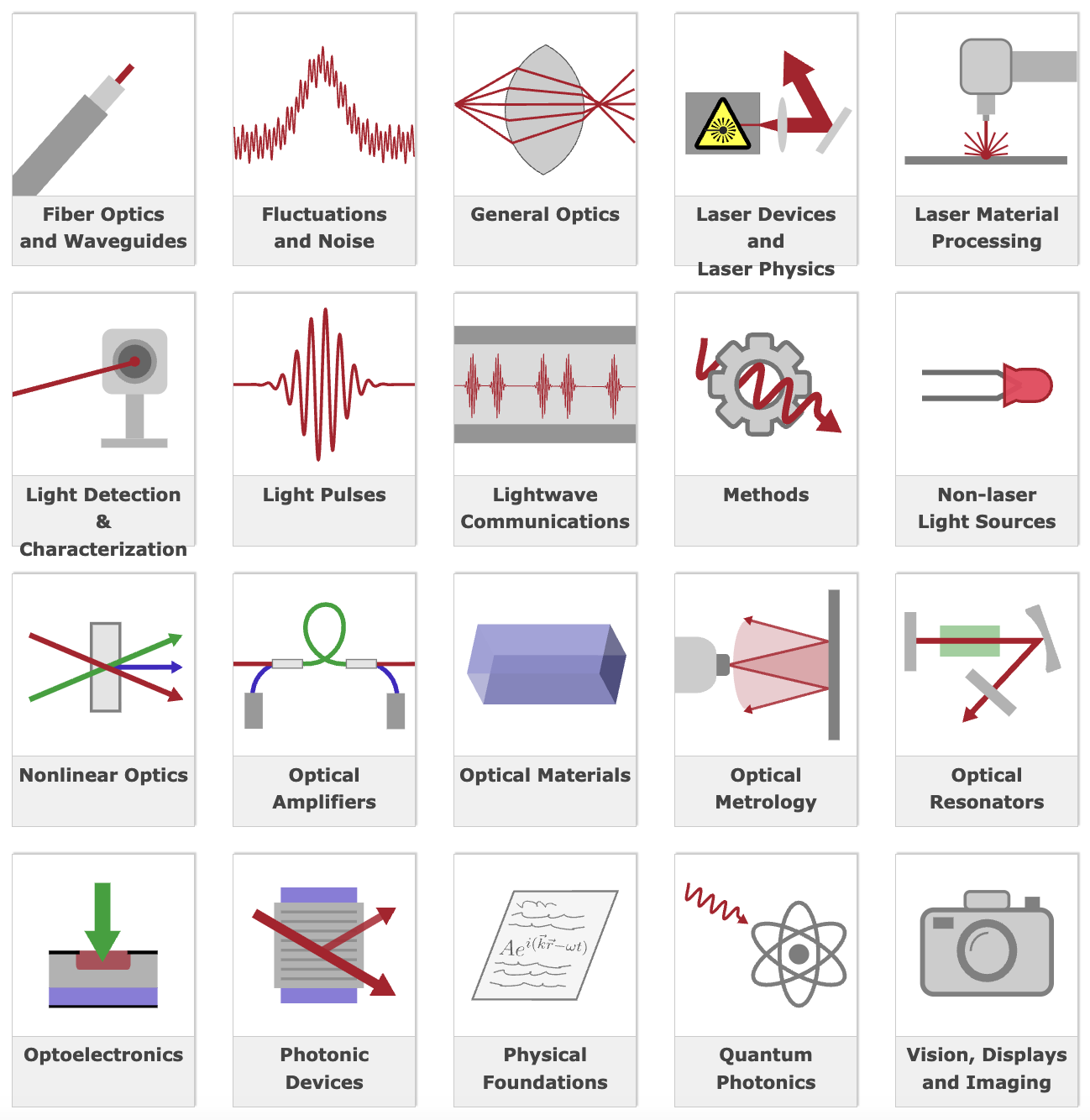
Convenient location for many relevant and contemporary fields/topics in the optics space, including geometric optics, lasers, electromagnetism, material optical properties, and signal processing. It has very concie and well-written articles that simplify concepts and explanations and provide citations to begin a deeper dive, if you so choose. You can just search any relevant topic and add RP Photonics to the end of your search query to find their articles or you can just navigate on their website. Topics and subtopics are broken up into categories.
PHYSDepot Online Seminar/Event Calendar (Displaying in EST)
Built by the community, for the community ⚛️
PHYSDepot.org is powered by students, educators, and researchers worldwide. Whether you're curating a resource or writing content, there's a place for you here!
Core Contributors
*PHYSDepot does not claim to be formally affiliated with, funded by, or represented by the depicted institutions. This banner is for illustrative purposes only; it represents institutions with which our contributors and project partners are affiliated and the breadth of our professional network.
